
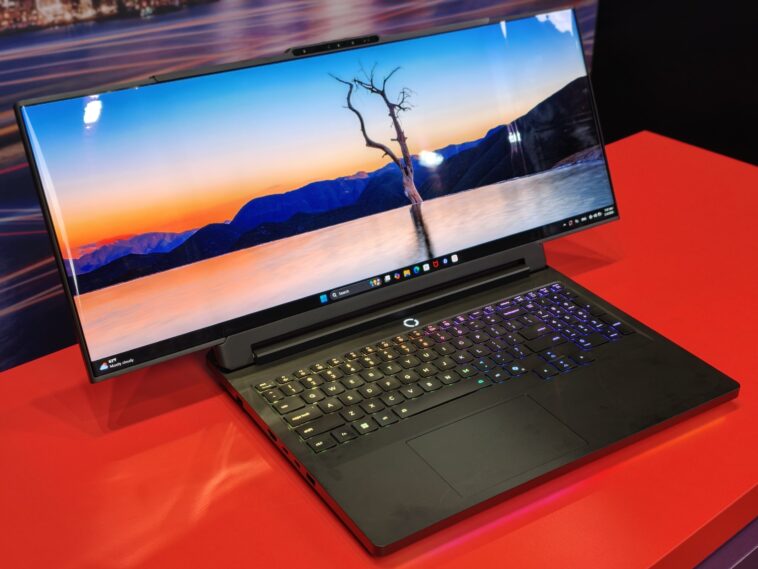
One of the biggest sacrifices made when gaming on a laptop instead of a desktop? Screen size, especially if you’ve got a widescreen monitor. So, why not get a widescreen laptop?
That’s the promise of Lenovo’s Legion Pro Rollable concept laptop that the brand is showing off at CES 2026 — a laptop with a display that extends out horizontally in both directions. It’s a new take on the rollable OLED display tech that we’ve also seen in Lenovo’s ThinkBook line, with the display initially curled up at both ends of the laptop.
Lenovo Legion Pro Rollable Concept
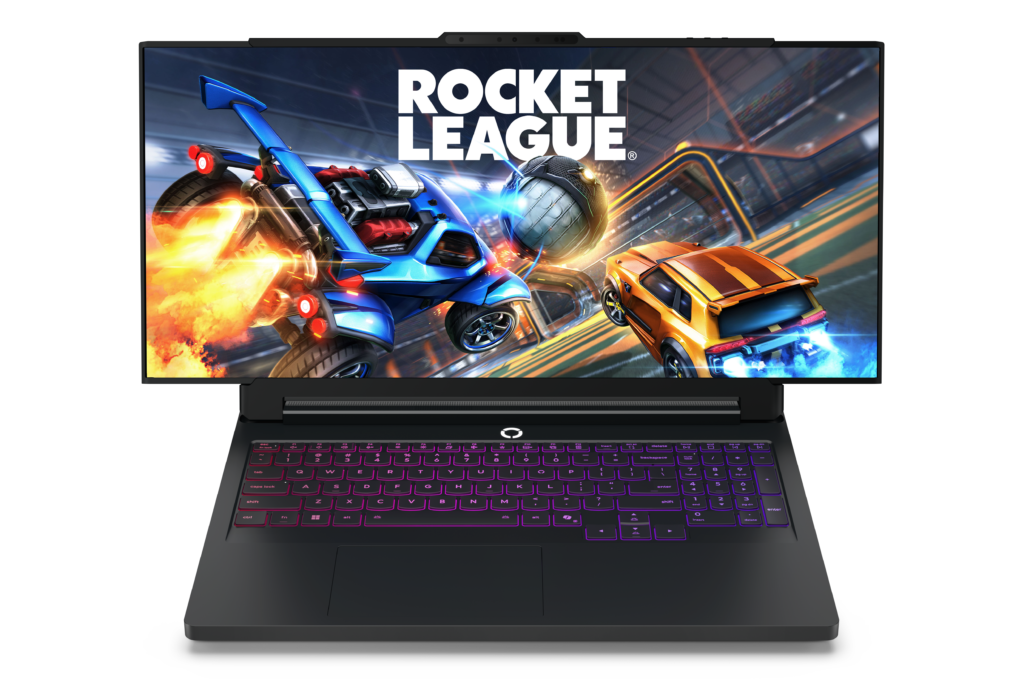
The laptop has a 16-inch display by default, but that display can be extended out to become a 21.5-inch panel or 24-inch panel to get proper widescreen gameplay. At CES, Lenovo had this concept laptop kitted out with the specs from the Legion Pro 7i, which includes an NVIDIA RTX 50 series mobile GPU and an Intel Core Ultra CPU, so Lenovo doesn’t intend for this to be a device that skimps out on hardware anywhere else on the spec sheet.
Lenovo is gassing this concept up as a must-have for esports pros, particularly those who want to work on team shooters that demand coordination and really good peripheral vision. But, it’s fair to say a whole lot of other folks are going to be interested in a laptop that can shift from standard to widescreen and back again, even folks who don’t game — sounds like a terrific concept for a general entertainment laptop. The only question will be how well the display holds up to repeated extensions, but Lenovo says they’ve used bits of low-friction material to minimize abrasion.
No word on whether or not Lenovo will release this laptop commercially, but historically, concept PCs that Lenovo shows off at CES end up reaching the market more often than not. Considering it has a rollable OLED display and the most powerful laptop hardware available, it’s probably fair to say that when that day comes, it will cost many thousands of dollars.
Legion Go 2 finally gets a SteamOS version
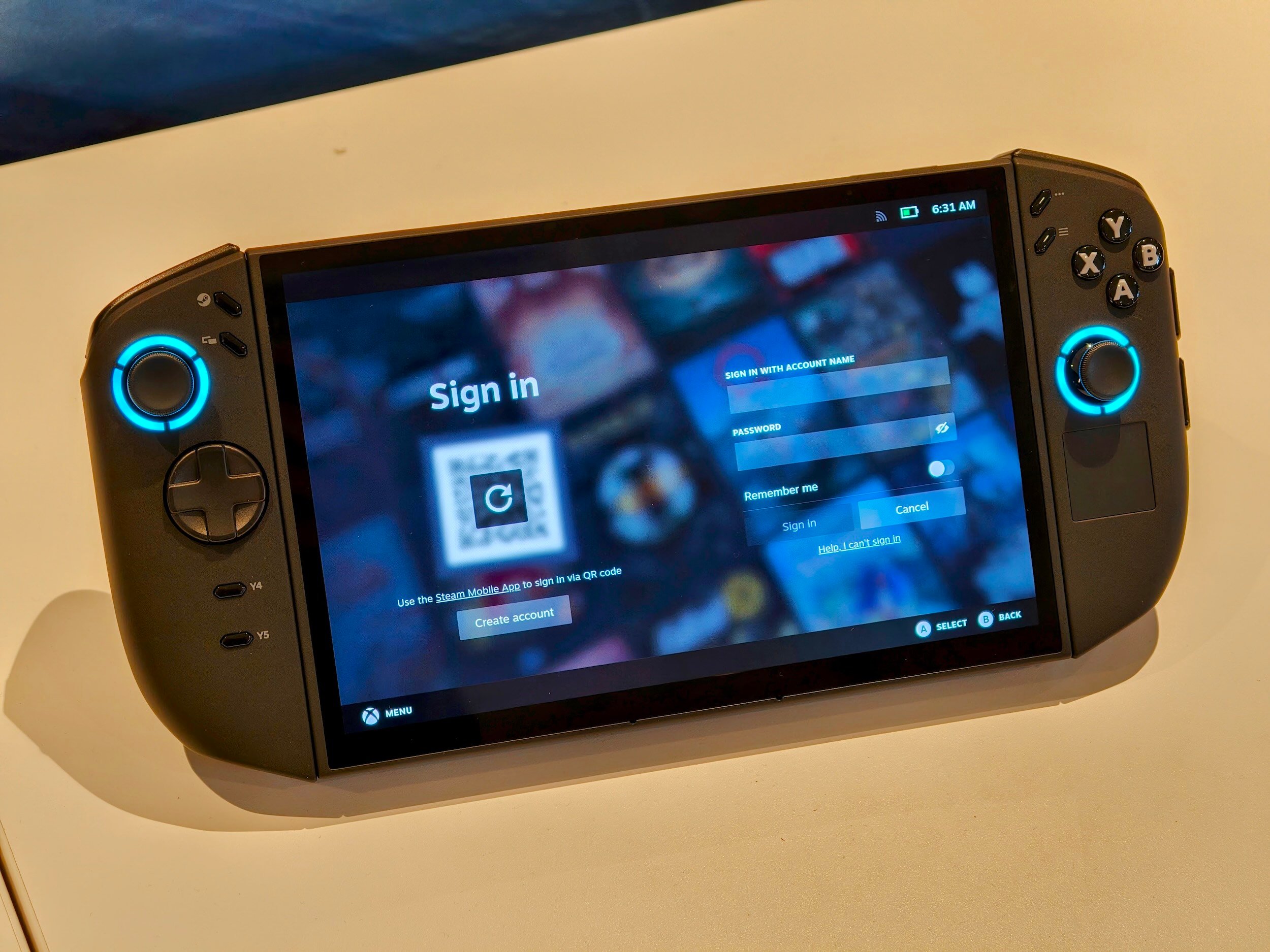
The Steam Deck finally has some real competition. The Lenovo Legion Go 2 SteamOS version just became official at CES 2026, in a much-hoped-for announcement for folks big into mobile PC gaming.
At last year’s CES, Lenovo brought SteamOS to the smaller, lighter Legion Go S, and now the larger, more powerful handheld will get the same treatment — although you’ll have to wait for June to get your hands on it.
In terms of hardware, the Lenovo Legion Go 2 is still the same handheld announced at IFA in September of 2025 — an 8.8-inch device with an OLED display and running on an AMD Ryzen Z2 Extreme processor. Come June, you’ll be able to purchase that mobile PC gaming powerhouse with SteamOS rather than Windows 11, with the price starting at $1,200 ($100 more than the Legion Go 2 with Windows).
SteamOS is built for gaming, building on Steam’s dominance as a PC gaming platform and store. Its popularity with gamers has made a SteamOS version of the Legion Go 2 much requested, with many enterprising gamers finding (often buggy) workarounds to get SteamOS working on existing Legion Go units. Pretty soon, they’ll no longer need to go through the trouble.
As per usual, Lenovo had lots more to show off at CES 2026, including concept devices that we could see on the market in the near future. They also had some lower-cost gaming laptops for folks not looking to shell out over $2,000 for something in the Legion Pro lineup.
AI Frame Gaming Display
Lenovo is also playing around with the potential for AI use in gaming, which sounds fraught with cheating potential, but it sounds like Lenovo is showing some caution with how they’re applying the technology. The only use they demonstrated for multiplayer games was a fresh take on picture-in-picture, with the display detecting where the cursor is and generating a zoomed-in picture of that area in the upper right corner of the screen. It’s only going to be situationally useful, because there are a lot of games where you don’t want any part of the scene blocked at any time, even the upper corner. But, in some cases, it could help players to see far-away areas or map details more clearly.
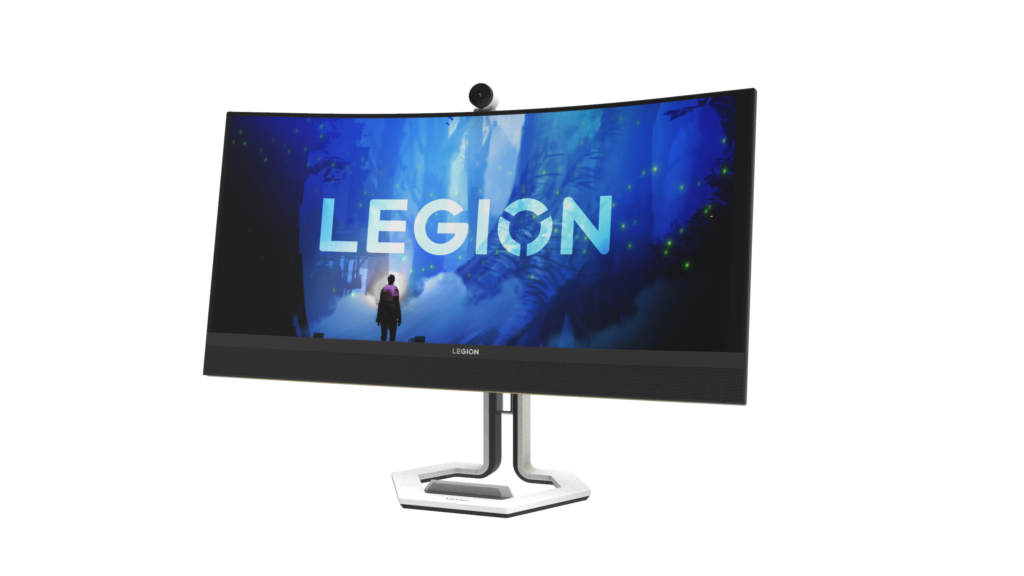
Other applications were more for single-player games. AI Game Assistance will offer help with harder bosses, shrinking the game window and pulling up a smaller sidebar window with helpful advice. It’ll be interesting to see where that advice is pulled from — not likely from the developers themselves, so potentially from game wikis or Reddit. Wherever they get the data from, it’ll be a challenge to make sure that the AI advice is consistently accurate.
And, of course, this being a piece of gaming hardware, there’s cool stuff going on with lighting. While there is the potential to change ambient colors to match a scene, there are also practical applications — Lenovo demonstrated the display detecting damage being taken and brightening up certain areas to show where the danger was coming from.
On the whole, the AI Frame Gaming Display seems more like a true concept device than the Legion Pro Rollable laptop, which already seems ready for action. It sounds like Lenovo is putting this display concept out there to brainstorm ideas for some really compelling uses for AI in gaming — we’ll probably hear of more uses for this kind of display in the months and years to come.
Legion 5, 7 and LOQ laptops
Finally, Lenovo refreshed the more affordable gaming laptops in their non-Pro lines. The Legion 7a and Legion 5a/5i are 16-inch and 15-inch laptops, respectively, all with OLED displays and NVIDIA GeForce RTX 5060 laptop GPUs — one of the lower-powered GPUs in the 50 series, which is going to be the main difference between these and Lenovo’s pricier Legion Pro laptops. The a and the i after the numbers indicate AMD and Intel CPUs, with the a options getting Ryzen AI 9 CPUs and the Legion 5i getting up to an Intel Core Ultra 9 CPU. However, Lenovo will also have a cheaper Legion 5a available that uses an AMD Ryzen 200 series CPU.
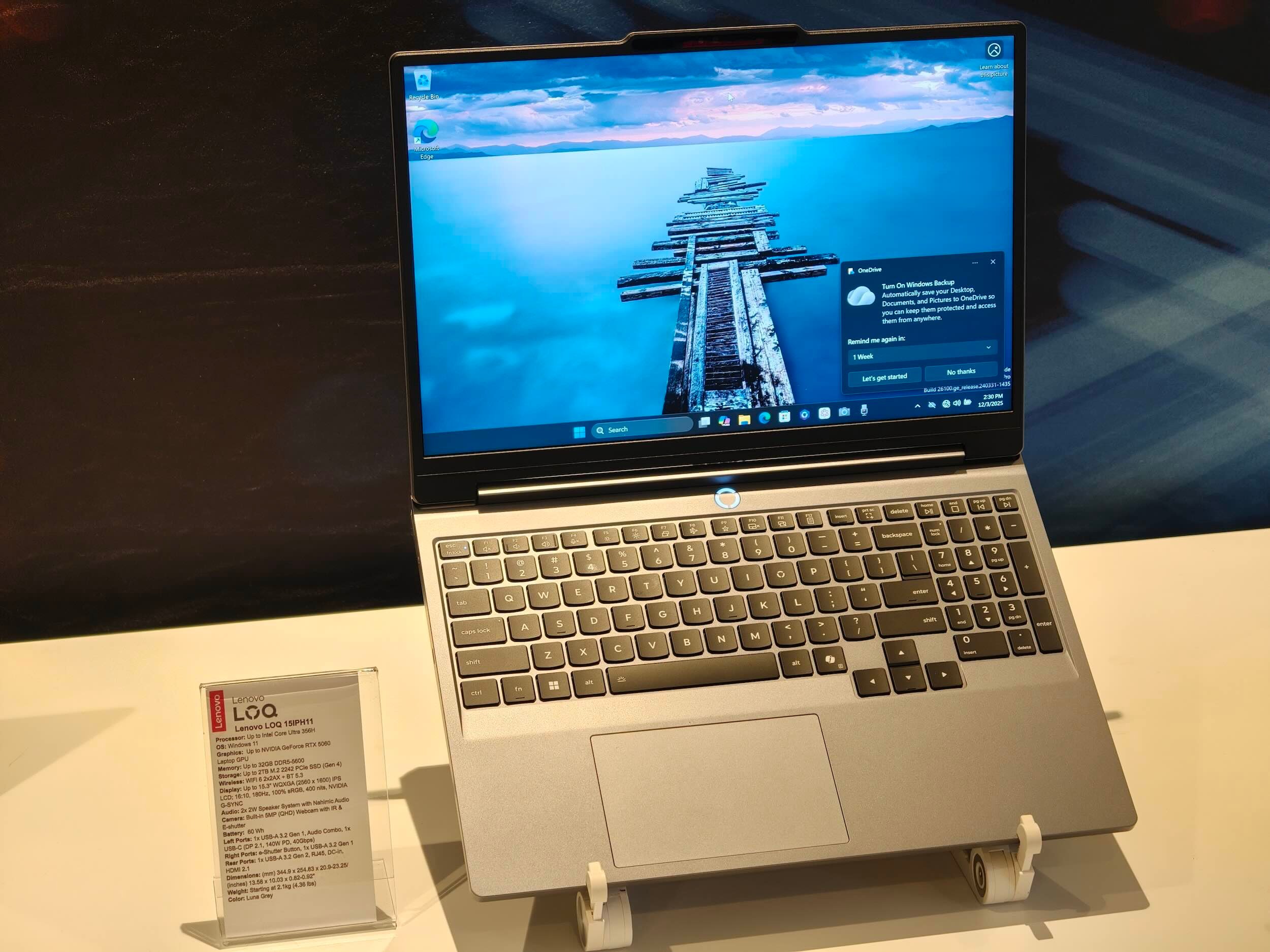
The Lenovo LOQ 15AHP11 is the least expensive option of the bunch, a 15-inch laptop that has an IPS LCD instead of an OLED display. This LOQ laptop runs on an AMD Ryzen 7 250 CPU. Like the Legion laptops, the NVIDIA GeForce RTX 5060 is the GPU of choice.
All of the new Legion and LOQ laptops will be available in April, with the Legion 7a the most expensive option at $2,000. The Legion 5i is next at $1,550, while the Legion 5a options are priced at $1,500 and $1,300 (the latter being the one with the AMD Ryzen 200 series CPU). The Lenovo LOQ 15AHP11 is the least expensive option at $1,150, which is not too bad a price for anyone who wants to spend the least amount of money possible on a laptop with a performance GPU inside.